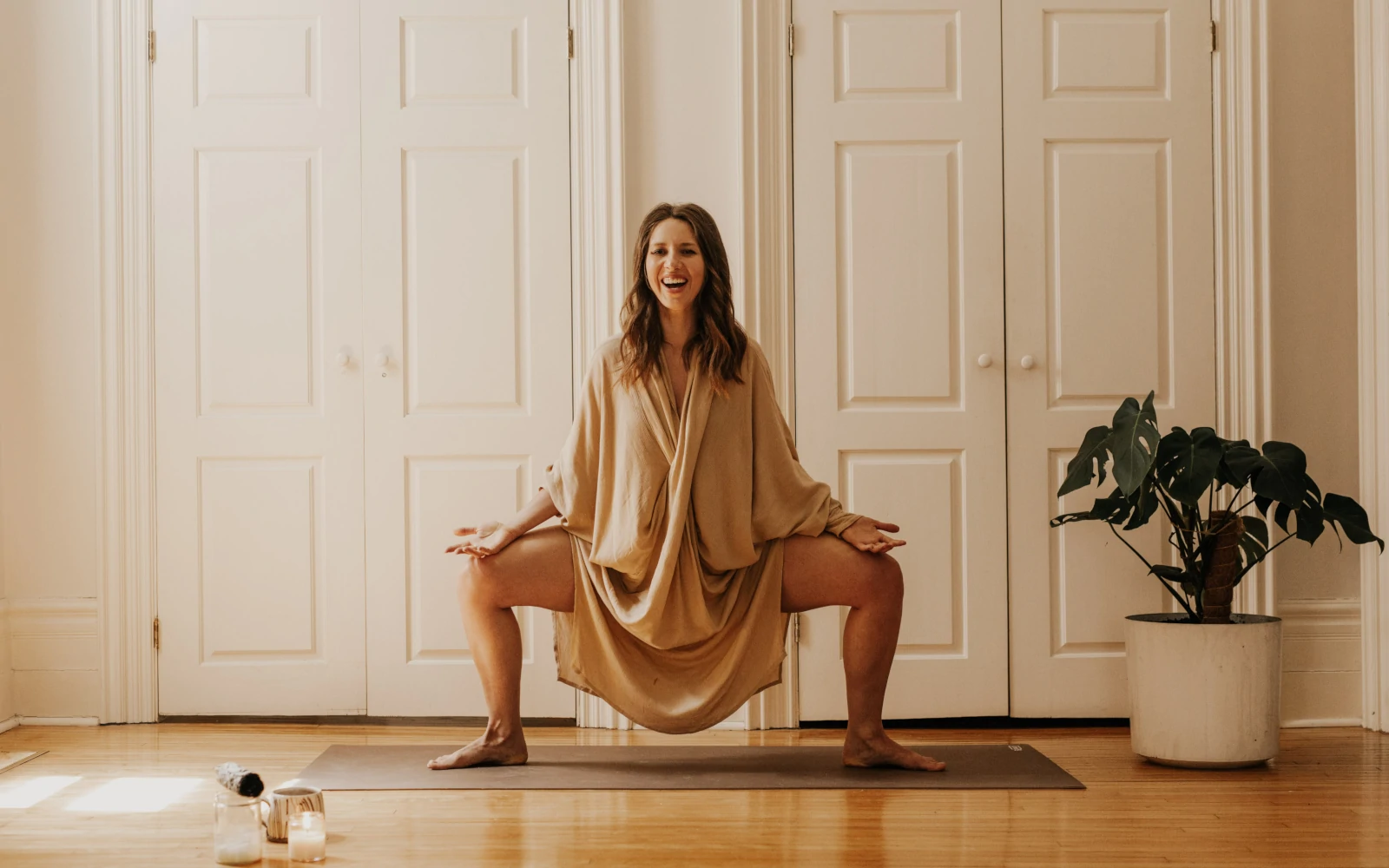
Why Regulation Matters More Than Flexibility
Many people come to yoga hoping to become more flexible. Yet the deeper transformation often begins elsewhere: in the nervous system’s ability to feel safe enough to soften, adapt, and move with greater intelligence.
Flexibility is often treated as one of yoga’s primary goals.
People come to practice hoping to open their hips, lengthen their hamstrings, or move more deeply into postures that once felt inaccessible. In many cases, this desire is understandable. Restriction in the body can feel frustrating, and greater range of motion is often associated with ease, youthfulness, and physical freedom.
But flexibility, on its own, is rarely the deepest answer.
What many people experience as tightness is not simply a mechanical limitation in the muscles. Very often, it is a protective response from the nervous system.
The body is always listening to what it perceives as safe and what it perceives as threatening. When the nervous system senses stress, instability, overexertion, or unpredictability, it often responds by creating tension. Muscles brace. Breath becomes shallower. Movement becomes more guarded.
From the outside, this may look like stiffness.
Internally, it is often an intelligent form of protection.
This is why forcing flexibility can be so ineffective.
A muscle may be lengthened momentarily through effort, leverage, or repetition, but if the nervous system still does not feel safe in that range, the body will often return to its previous pattern. Sometimes it returns with even more resistance than before.
The issue was never simply the muscle.
It was the environment in which the movement was being asked to happen.
Regulation changes that environment.
When the nervous system becomes more settled, the body no longer needs to defend itself in the same way. Breath deepens naturally. Muscles begin to release unnecessary holding. Movement becomes less reactive and more responsive. Range of motion often improves, but it improves as a result of safety rather than force.
This distinction matters.
In a dysregulated state, people often try to achieve flexibility by pushing harder. They stretch aggressively, chase intensity, or believe that more effort will create more openness. Sometimes this produces temporary sensation, but not always meaningful change.
When regulation comes first, the entire experience shifts.
The body becomes more willing to participate.
This is one of the quieter truths of yoga practice: lasting change often comes not from demanding more of the body, but from creating the conditions in which the body can trust what is being asked of it.
For some people, this begins with slowing the pace of practice. For others, it begins with learning how to breathe without strain. Sometimes it is the support of a private setting that makes the difference, removing comparison and allowing attention to settle inward.
The sequence itself matters far less than the state in which it is practiced.
A regulated body moves differently.
Posture becomes less rigid. Breath becomes less managed. The person is no longer trying to overpower sensation, but to listen to it. In that listening, the body often reveals where it is ready to soften and where it still needs support.
This approach can feel unfamiliar at first, particularly for those who have been taught to equate intensity with progress. Yet over time it becomes clear that regulation does not make practice smaller. It makes it deeper.
Movement becomes more intelligent because it is no longer built on compensation.
Even strength begins to change under these conditions. It becomes less about gripping and more about support. Less about effort layered on top of tension, and more about organization within the body itself.
This is one of the reasons private yoga can be so powerful.
When attention is directed toward the individual rather than the group, it becomes easier to notice the subtle signs of regulation and dysregulation. The practice can be adjusted accordingly. Instead of asking the body to meet an external form, the work begins to respond to what the body is ready for that day.
This creates a very different kind of progress.
The body opens, but more importantly, it becomes more available.
Flexibility may still develop. In many cases, it develops more fully than before. But it is no longer the sole objective. It becomes one expression of something more fundamental: a nervous system that is learning it does not need to hold so tightly.
In this way, regulation is not separate from yoga practice. It is central to it.
Because the body does not truly open through force alone.
It opens through safety, attention, and the gradual intelligence of trust.